FCI Godown Guide: How FCI Stores the Nation’s Grain
An FCI godown is a storage place where the Food Corporation of India keeps wheat and rice bought for the central pool until it is moved out for ration shops, welfare schemes or open market sales. In many villages and towns people simply call it the FCI godam, and inside FCI the usual word is depot.
This page explains the kinds of storage FCI uses, how grain is kept safe inside, how private owners can offer space, and how to find the FCI depot nearest to you. It is written for curious citizens, new depot staff and godown owners. We are an unofficial guide, so for any tender or posting always check with FCI itself.
What an FCI Godown Is
FCI purchases wheat and rice from farmers at the minimum support price, keeps buffer stocks for the central pool, and moves grain across the country by rail and road. All of that grain has to wait somewhere between purchase and use. That somewhere is the godown.
A food corporation of india godown can be a single shed in a small town or a large complex with many sheds, a railway siding and its own office. Each depot works under an FCI district office, which in turn works under a regional office. To see how those offices fit together, read our FCI offices guide.
From the godown, grain goes out for the public distribution system, for welfare schemes and for open market sale.

Owned and Hired FCI Warehouse Space
Not every FCI warehouse belongs to FCI. The corporation uses its own depots and also hires space from others.
| Type | Who owns it | How FCI uses it |
|---|---|---|
| FCI owned depot | FCI | Run directly by FCI staff |
| Central Warehousing Corporation godown | CWC | Hired by FCI for central pool stock |
| State warehousing corporation godown | The state body | Hired by FCI for central pool stock |
| Private godown under the PEG scheme | A private owner | Hired by FCI under a guarantee arrangement |
PEG stands for the Private Entrepreneurs Guarantee scheme. Under it, private parties build godowns to FCI's needs and FCI hires them on terms set in the tender. The exact terms change from scheme notice to scheme notice, so read the current document on fci.gov.in rather than any summary.
Covered Storage, CAP and FCI Silos
Inside the network you will see three main ways of storing grain.
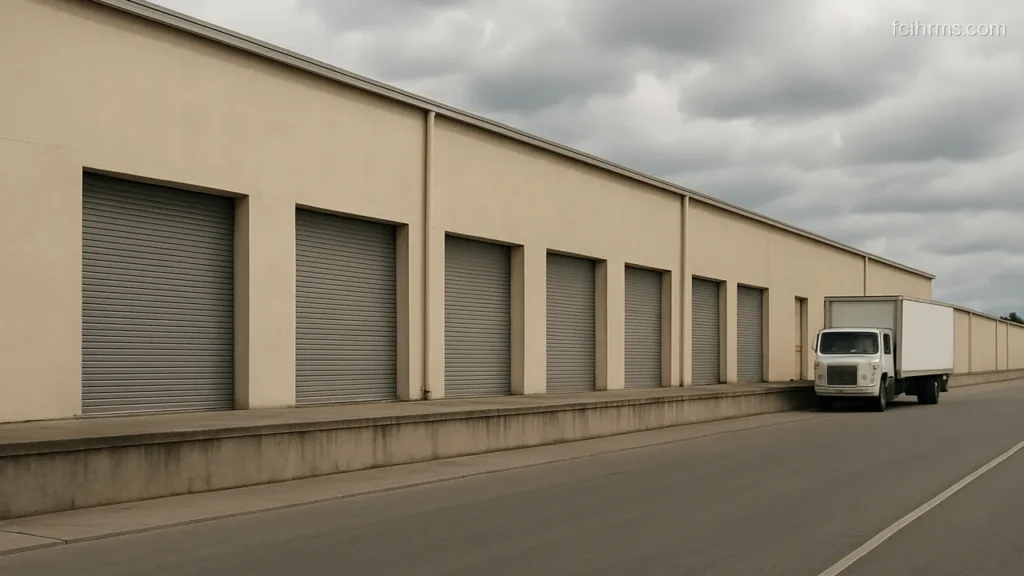
- Covered storage: regular sheds with a roof and walls, where bags are stacked on a raised floor.
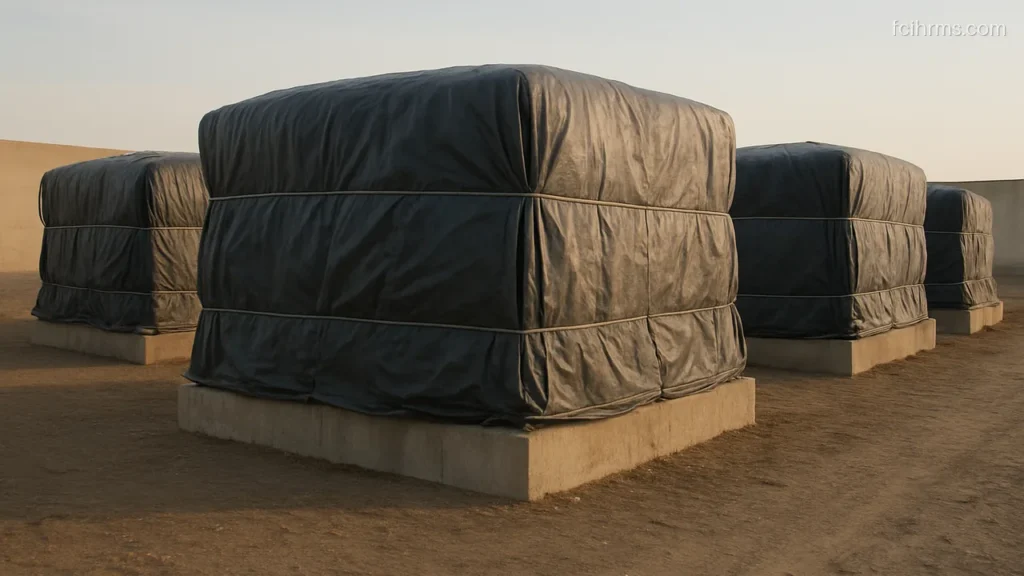
- CAP storage: Cover and Plinth. Bags are stacked on a raised platform in the open and covered with heavy sheets. It is used where shed space is short and is meant for shorter periods.
- Steel silos: tall round bins that hold grain loose, without bags. FCI silos are filled and emptied with machines, which cuts handling and bag use.
Which type a depot has depends on its location, age and the amount of grain moving through it.

How Grain Is Stacked, Fumigated and Checked
Grain can spoil if it gets damp or if insects get in. Depot staff follow set routines to prevent that. In broad terms:
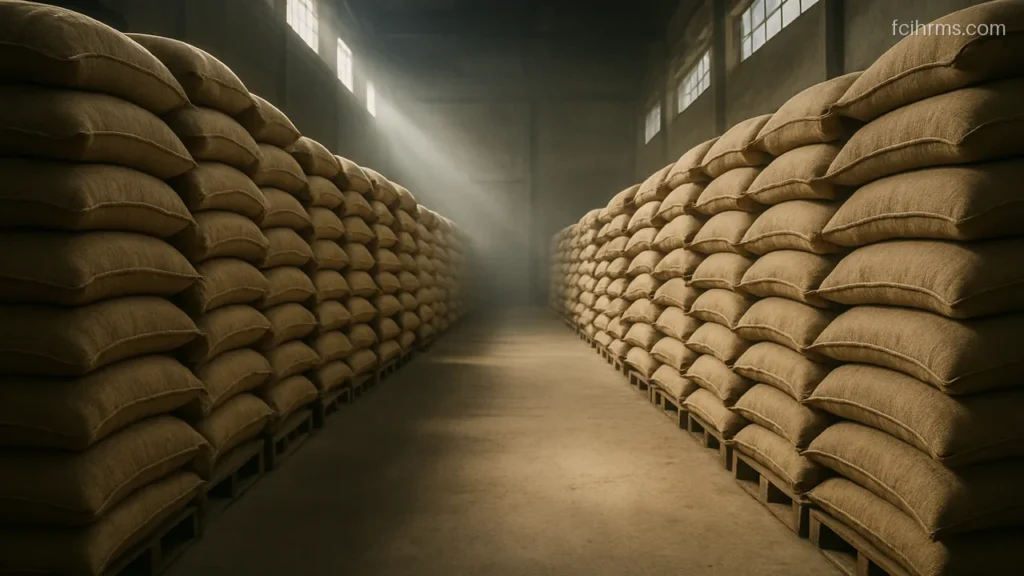
- Bags are stacked in neat blocks on raised dunnage, so air moves under them and floor damp does not reach them.
- Gaps are left between stacks and walls so staff can walk around and inspect every side.
- Stacks are covered and fumigated by trained staff when needed to control insects.
- Quality staff check samples from the stock at regular intervals.
- Receipts, issues, quality and storage details are recorded online, so officers can see the position.
Detailed rules for each step come from FCI's own manuals and circulars, which depot staff receive from their office.
FCI Depot Login and Depot Records
People sometimes search for fci depot login hoping to check stock at a local godown. There is no public login for that. Depot staff record their work in the Depot Online System using a user ID from their office, and much of that depot work is now shifting to Anna Darpan.
If you want to see stock figures as a citizen, the public FCI Reports mobile app shows stock positions. Our IRRS FCI guide explains where those numbers come from. Employees looking for their own HR records should use FCI HRMS instead.
How Owners Can Offer a Godown to FCI
If you own a warehouse or land and want to rent space to FCI, there is no direct sign up form. FCI hires storage through tenders.
- Watch the tenders section on fci.gov.in and notices from the FCI regional office for your state.
- Read the full tender to see the location, capacity, construction standard and period FCI wants.
- Check the eligibility rules and the documents asked for, such as ownership papers and approvals.
- Submit your bid in the way and by the date the tender states.
- Ask the regional office in writing if anything in the tender is unclear.
Terms, rent and guarantee periods are set in each tender, so never rely on figures heard from agents. Deal only with the FCI office named in the notice.
Find an FCI Depot Near You
FCI does not run a public depot locator on this site, and we cannot give addresses. The simplest route is to contact the FCI district office for your area. Staff there can tell you which depot fci runs or hires in your area and guide you. The regional office in your state capital can also help.
Contact details for zonal, regional and district offices are listed on fci.gov.in. If you are a trader looking to lift grain bought in an e-auction, the depot is named in your sale papers. See our FCI value junction guide.

Questions people ask
What is an FCI godown?
It is a storage place where FCI keeps wheat and rice for the central pool. Grain waits there until it goes out for the public distribution system, welfare schemes or open market sale.
Is an FCI depot the same as an FCI godam?
Yes. Godam is the everyday Hindi word, godown is the common English word, and depot is the term FCI uses in its own work.
Does FCI own all its warehouses?
No. FCI uses its own depots and also hires godowns from the Central Warehousing Corporation, state warehousing corporations and private owners under the PEG scheme.
What are FCI silos used for?
Steel silos store grain loose, without bags. Machines fill and empty them, which reduces handling and the need for bags.
How can I rent my godown to FCI?
FCI hires storage through tenders. Watch the tenders section on fci.gov.in and your regional office notices, then follow the steps and rules in the tender itself.
How do I find a food corporation of india warehouse near me?
Contact the FCI district office for your area or the regional office in your state capital. Their contact details are on fci.gov.in.
Read next
 Depot Online SystemDepot Online System explained: what FCI DOS records, who logs in at fcidepotonline.gov.in, what…
 FCI officesHow to find the right FCI regional office, zonal office or district office, what…
 OMSS e-auctionFCI value junction explained for buyers: how OMSS(D) e-auctions work on valuejunction.in/fci, who can…
 IRRSIRRS FCI in plain words: the internal system for grain stock, depot capacity use…
 FCI full formFCI full form is Food Corporation of India. Learn the Hindi name, what FCI…